

WHY TVS
The Village School Difference
The Village School Promise : Your child will leave not just with a transcript, but with a deep sense of who they are and the tools to build a fulfilling, purposeful life.
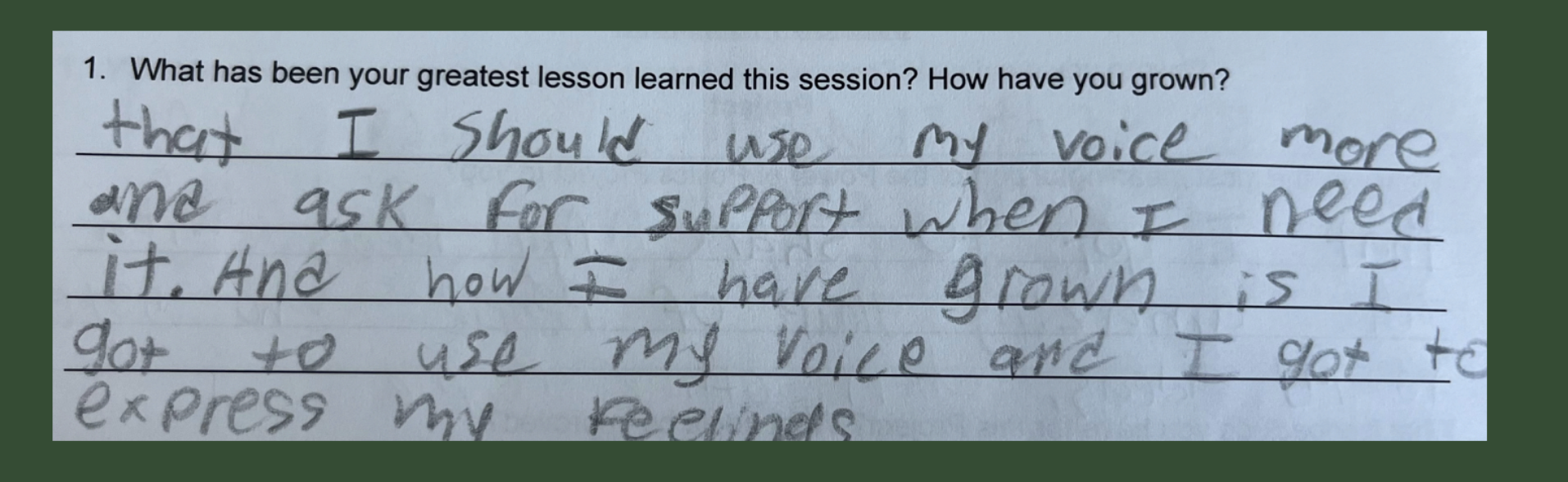
Reflection, a powerful tool that drives deeper understanding and personal growth, is a cornerstone of our learning model that is often overlooked in most educational experiences. When learners take the time to thoughtfully reflect on their learning experience, they engage in higher-order thinking that moves beyond simple memorization to meaningful connections and self-awareness.
“…I should use my voice more and ask for support when I need it. And how I have grown is I got to use my voice and I got to express my feelings.”
— TVS Learner, 4th grade
Why Parents Choose The Village School
We speak a different language.
At The Village School we believe the language we use to describe each other, our learning spaces, and learning outcomes are essential to shaping powerful learning. Our language of learning is different and intentional. Research from across contexts has shown that our language matters. Ron Ritchhart, a principal researcher at the Harvard Graduate School of Education, writes extensively about the power of language in our schools, and the power the words we use have to shape the culture of thinking and learning in our communities. Language expert James Pennebaker, and even social science researcher Brene Brown have studied language in their respective fields and have come to similar conclusions: our language and words have the power to shape our experiences.

The Big Question: Does it actually work?
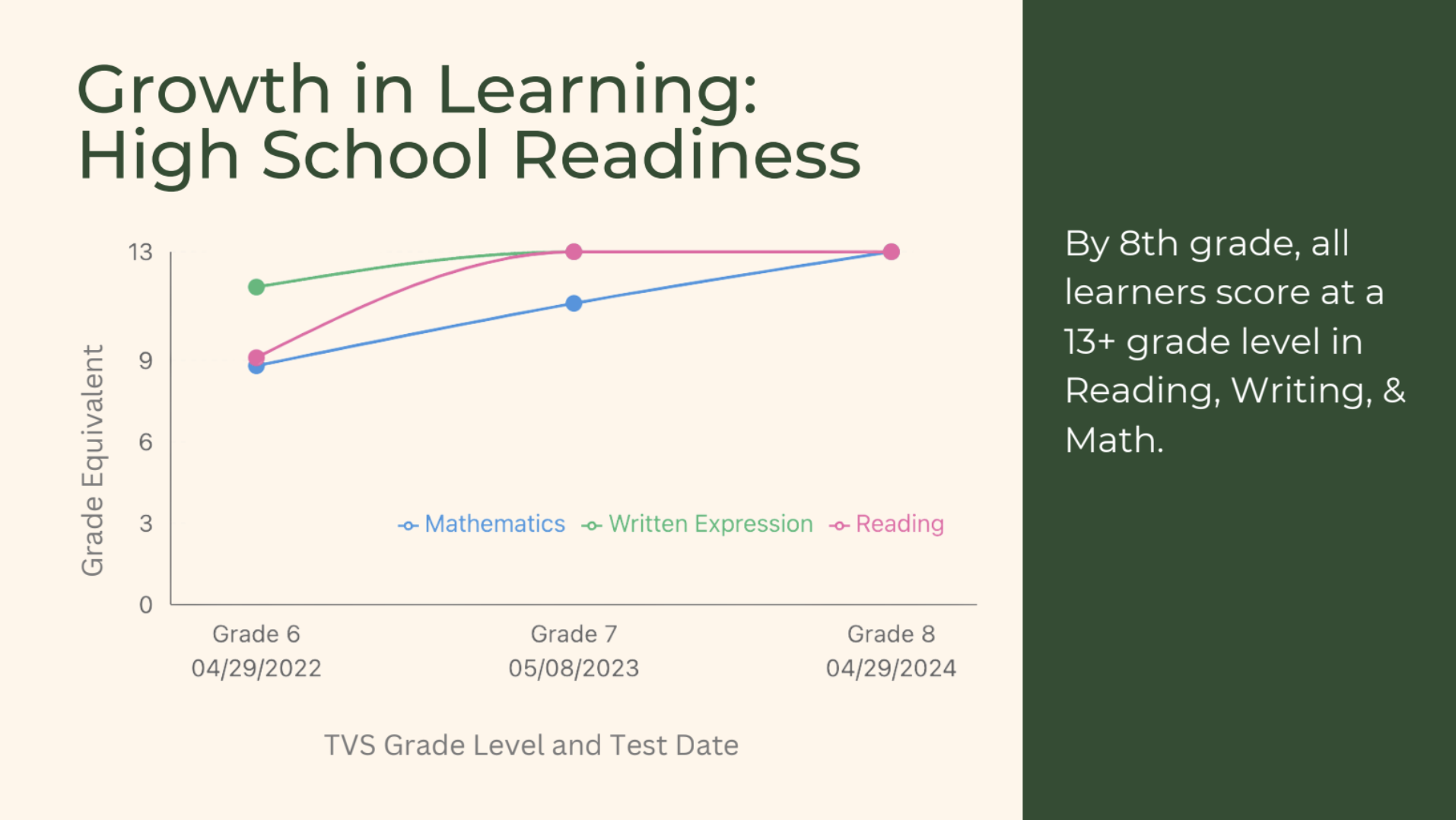
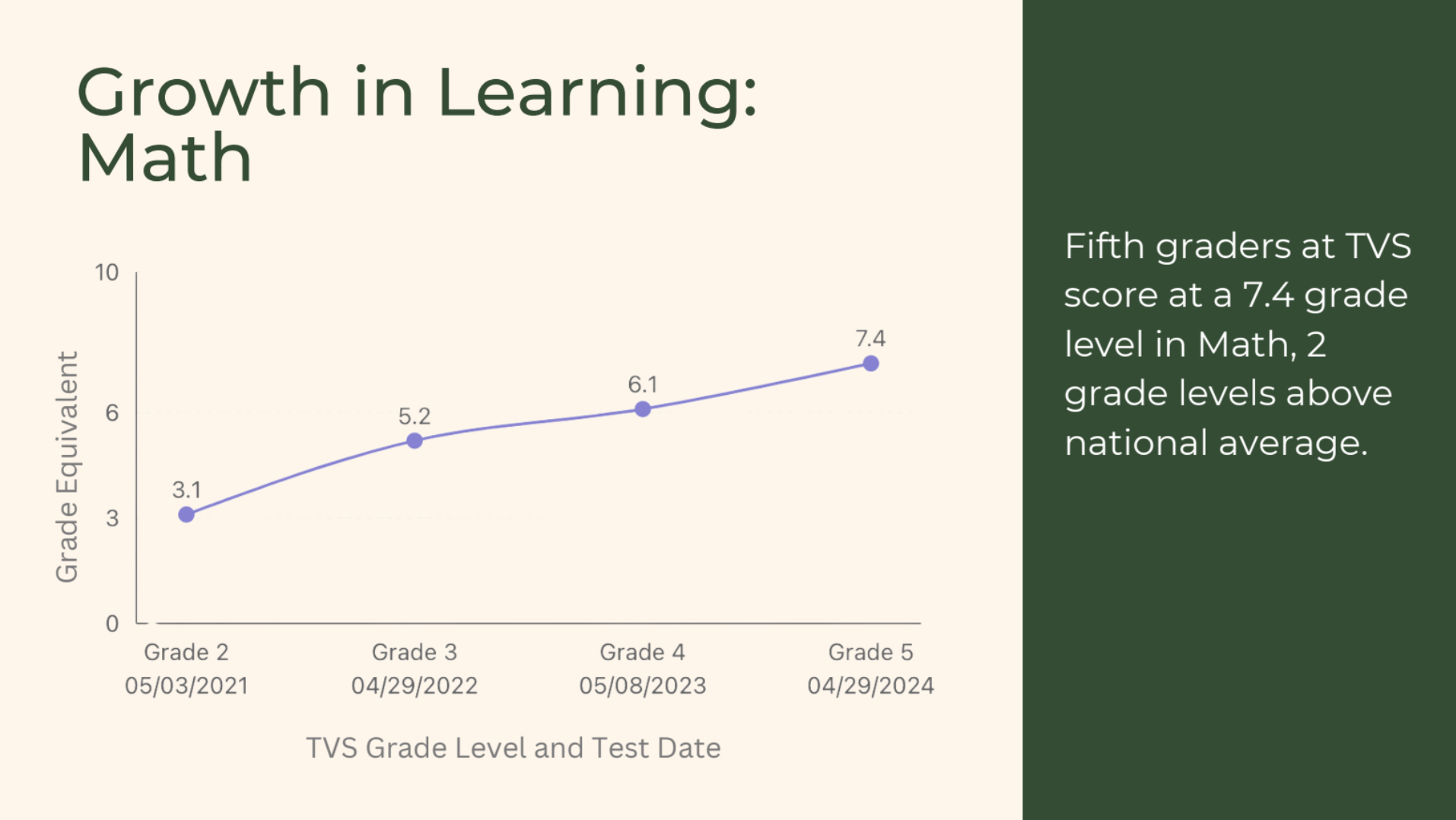
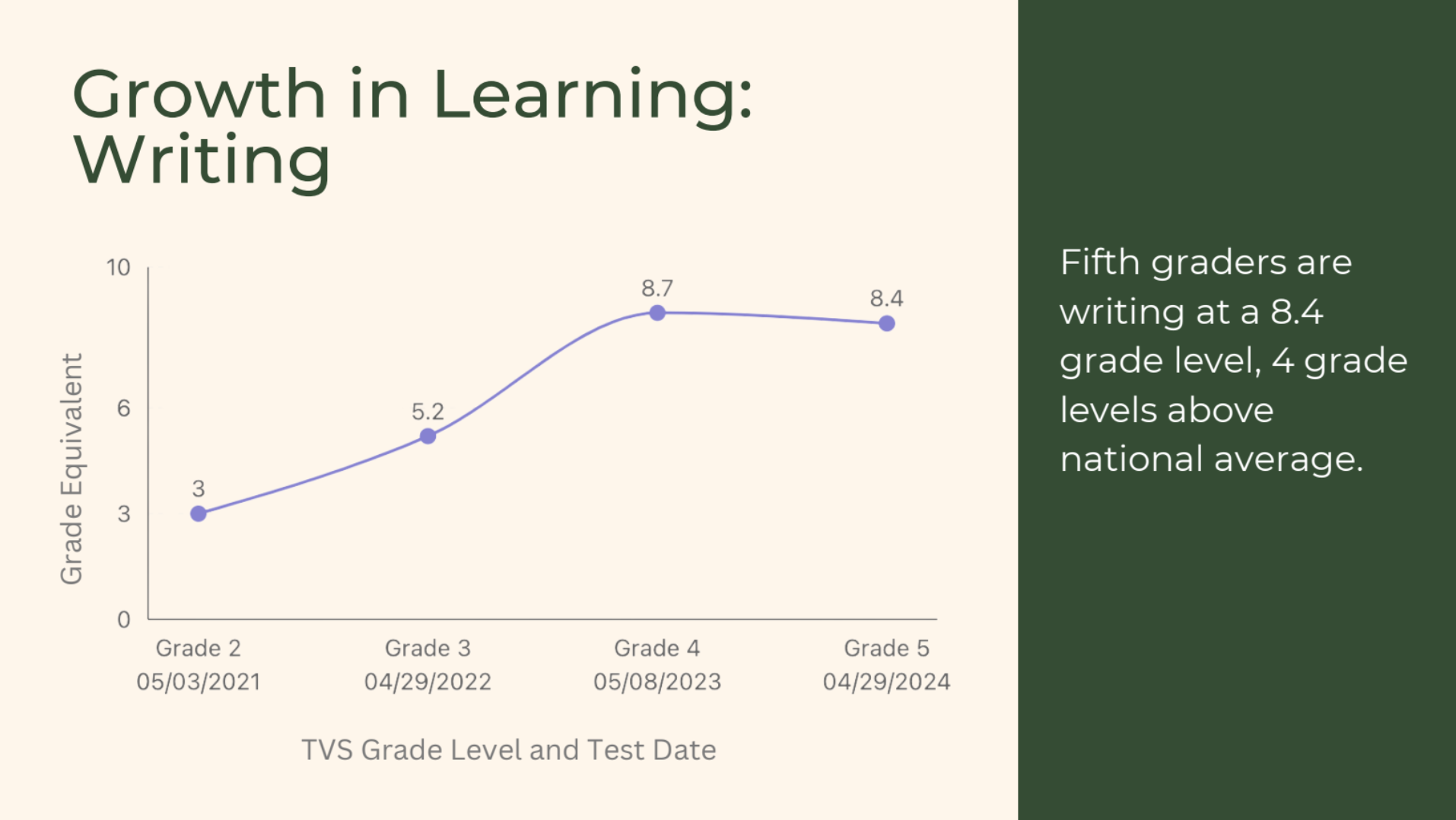
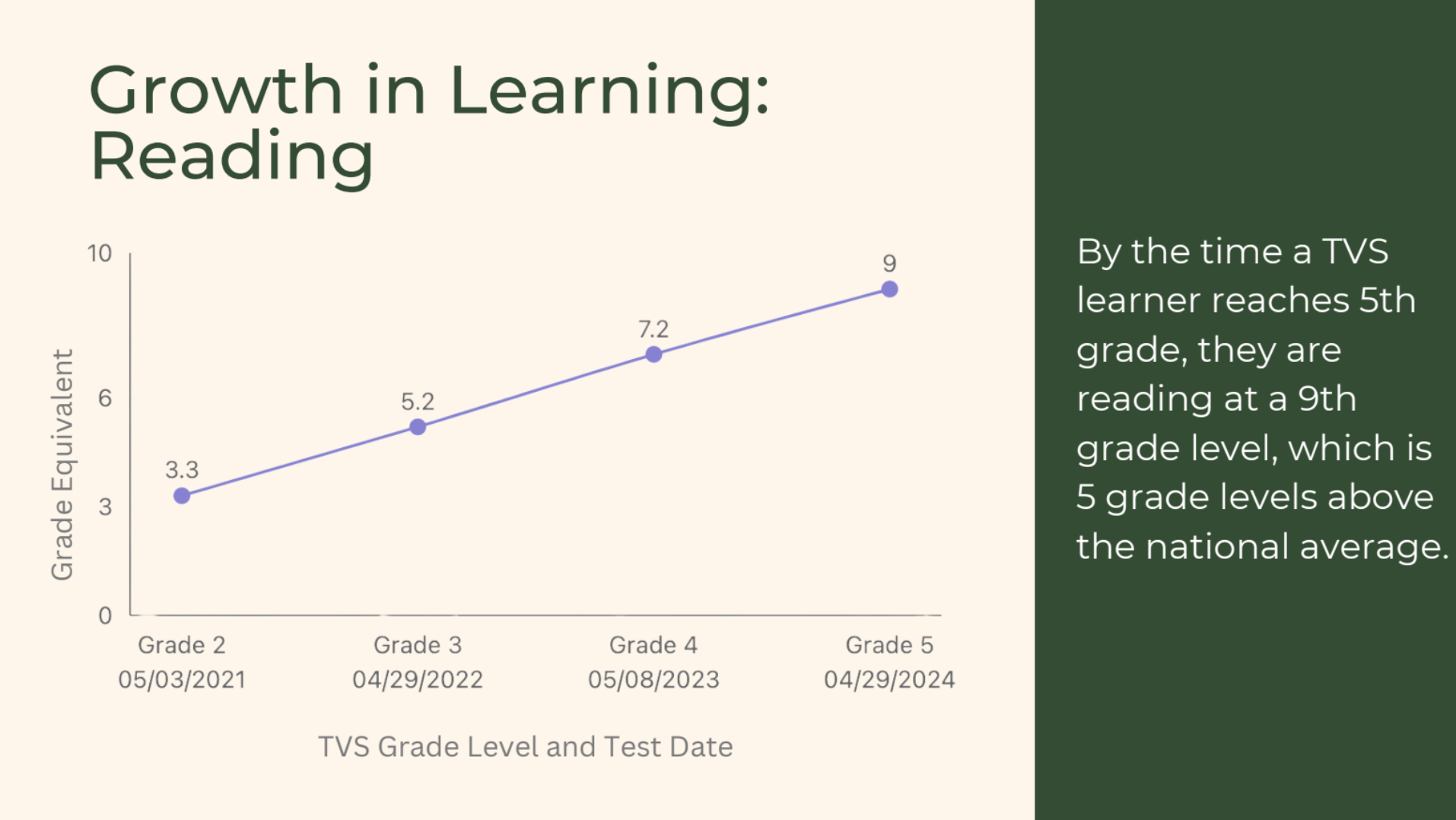
Though we don’t measure learners with grades, we give ourselves an A+ on this, our most frequently asked question. Standardized tests are optional at The Village School, however, we use them to assess who a learner is today compared to who they were yesterday – not to the person next to them or to some arbitrary standard. On average, TVS learners consistently test a grade and a half above the national average. But more importantly, our comprehensive assessments show that each learner is making significant strides in their unique learning journey.
HAVE MORE QUESTIONS?
We get it, this sounds really different! Here are just a few of our frequently asked questions.
-
At TVS we are interested in individual learner growth, rather than comparison to others. We believe the best way to determine how a learner is progressing is through multiple data points - the most important being a conversation with the learner.
Journey Reviews or learner-led conferences are offered twice a year when families are invited to a learner-led meeting sharing progress towards their goals and reflections on their learning experiences.
Discovery (2nd-5th) and Adventure (middle) school learners and their families have access to our school online learning dashboard at any time that shows a learner's progress and upcoming goals and tasks. Guides also update this dashboard with notes from one on one guide meetings for parents to check-in. Learners in these studios have individual badge plans that are also markers for progress and growth.
Once a year learners will take a standardized test to be used as just one data point that shows growth over time. Read more about our approach to standardized testing here.
-
Learners in Spark (PreK-1) are not permitted to be on tech, with the exception of older learners who are preparing to transition to Discovery Studio. Learners in Discovery (2nd-5th) and Adventure (6th-8th) are only on their computers about 25% of the time. Read more about our approach to tech here.
-
We believe that young people should be trusted to learn from their own experiences - even failures! There are plenty of adults at TVS (we have a 6:1 learner to guide ratio), but their role is different from a teacher, which is why we call them guides. The role of the guide is to create an environment where young people feel empowered to be self-directed, learn about themselves, and learn how to live together. While the traditional belief of a teacher suggests that the teacher holds knowledge to impart on others, a guide believes that young people are capable of creating their own knowledge and understanding. Read more about the role of a guide here.
-
We are not trained or staffed to serve children with serious learning differences, special needs, or who need specialized attention. However, our community includes learners who have or would qualify for 504 or IEP plans. We are able to meet most accommodations as they are already built into our learning model. In addition, emerging research focused on learning differences in learner-centered schools show it’s an environment where these young people thrive. If you believe TVS is a good fit for your learner please inquire and we will personally assess your unique situation and the fit of your learner.
What is The Village School’s approach to AI?
We’ve developed what we call Humentic Learning™—Human+Authentic—an approach that guides young people to follow their curiosity, apply critical thinking to real-world problems, and create solutions that emerge from their own original insights and self-understanding. TVS graduates leave having developed uniquely human skills, such as grit and self-awareness—keys to success in whatever path they choose.
The Village School Head of Learning Design, Dr. Elizabeth Dean, talks to Neil Chilson, Head of AI Policy about AI and the future of education.