The Art of Failure
Every piece of art holds a million actions you don’t get to see. A painter’s process for selecting which colors to use where, a sculptor’s technique for smoothing the rugged stone, or sometimes, it’s a young artist choosing to take a few deep breaths when their Pikachu drawing looks more like a Minion than they originally hoped.
This session in Spark, project time has been focused on art of all kinds. From drawing and painting to dancing and acting, learners are asked to reflect daily on one specific question: “What is art?”
“Anything that someone makes is basically art”
“Art is statues, paintings, and music!”
“I’m not sure if you know this but, the best art in the world is all of us…but the second best is probably the pyramids because I like all the sand.”
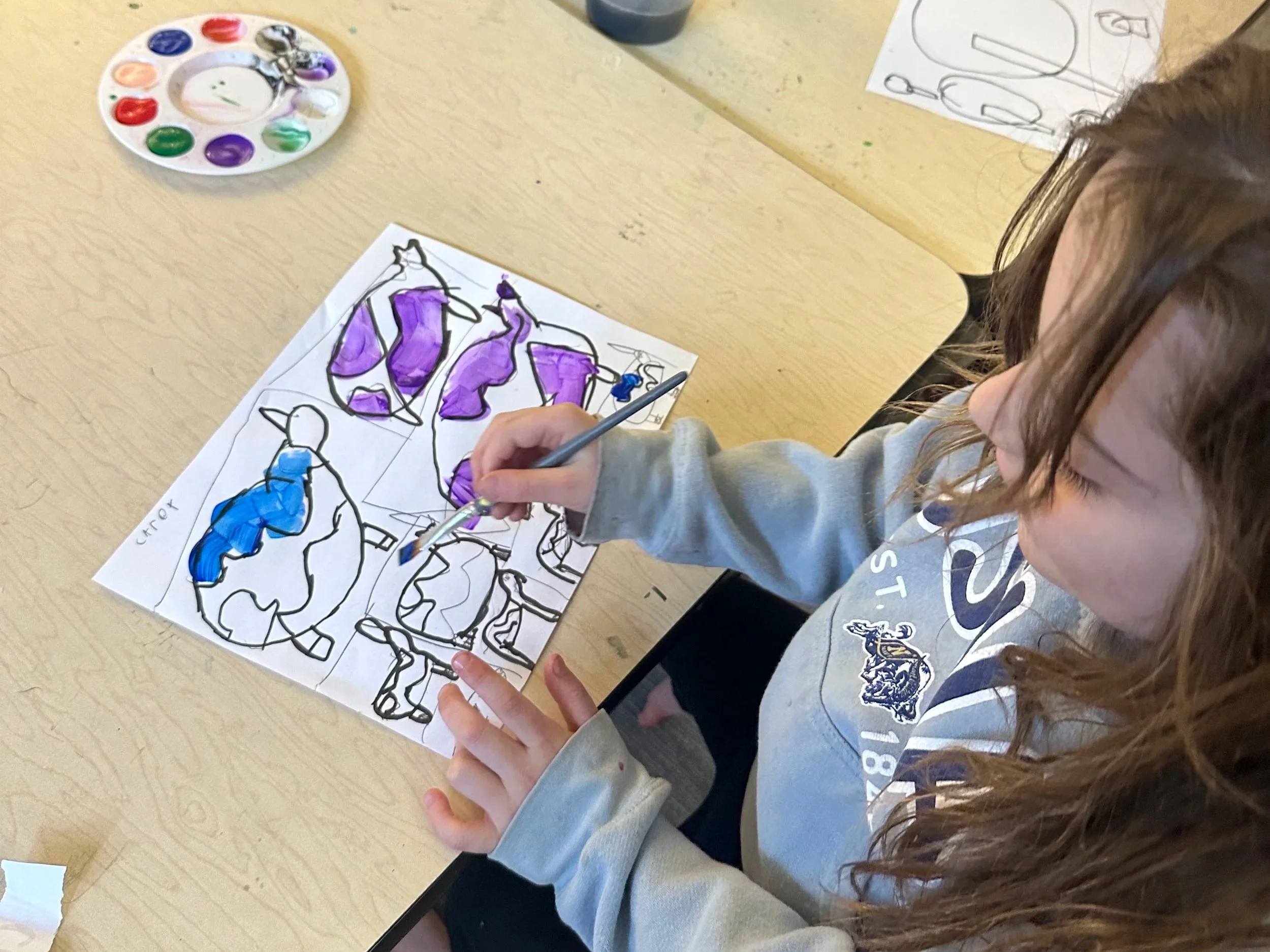
Learners started by practicing the basics of drawing and thinking about what shapes make up everyday objects. After that, they progressed to add a background for their scene, where they were challenged to think of the details that go unnoticed at first glance. Finally, they were able to add color and outlines, editing as they went to straighten their lines and add finishing touches. With each revision, they learned that mistakes and edits are normal and all part of the creative process.
While the pieces themselves are magical and creative, the most beautiful creation I’ve seen is their encouragement of one another and themselves. The project room is regularly filled with words like “I can help you with that!”, “Would you like me to show you how I did it?” “Wow! Yours is really good!, and You didn’t even need my help.” When a learner was disheartened by his uneven lines, another learner pulled up a chair to offer advice and words of encouragement without skipping a beat.
Even though they were working individually on their drawings, they worked collectively to grow their confidence. When the frustration of making a mistake strikes (of which there are many), it is quickly followed by a deep breath, advice from a friend, and another attempt.
The confidence built was inspiring to witness, and showed me that the key to finding success in learning a new skill isn’t always pushing yourself to your limits; it’s having a community around you that supports and encourages you. A circle that cheers you on when you fail is the norm here at TVS, and that in itself is a gift.
When success is measured by effort and resilience rather than perfection, we teach learners that they are strong enough to face tough challenges and that growth takes time. When a learner smudges their drawing or mixes their paint colors into a brownish-grey, they are practicing the most valuable art of all, the art of failure.
When they finished their pieces, a new reflection was made:
“Art is when you are making something,
and you don’t know exactly what it is,
but in the end it turns out so beautiful.”