Supporting Boys Through Peer Mentorship
Written by Bridget Yoko
As a school counselor, much of my role entails perspective taking. Children invite me into their world through play, conversations, and problem solving. I enter their situation and think about who they are as people and what the most supportive next step might be. I meet each child where they are in their development, and each age presents a different challenge. A few years ago, I realized that the biggest challenge was stepping into the perspective of a middle school boy.
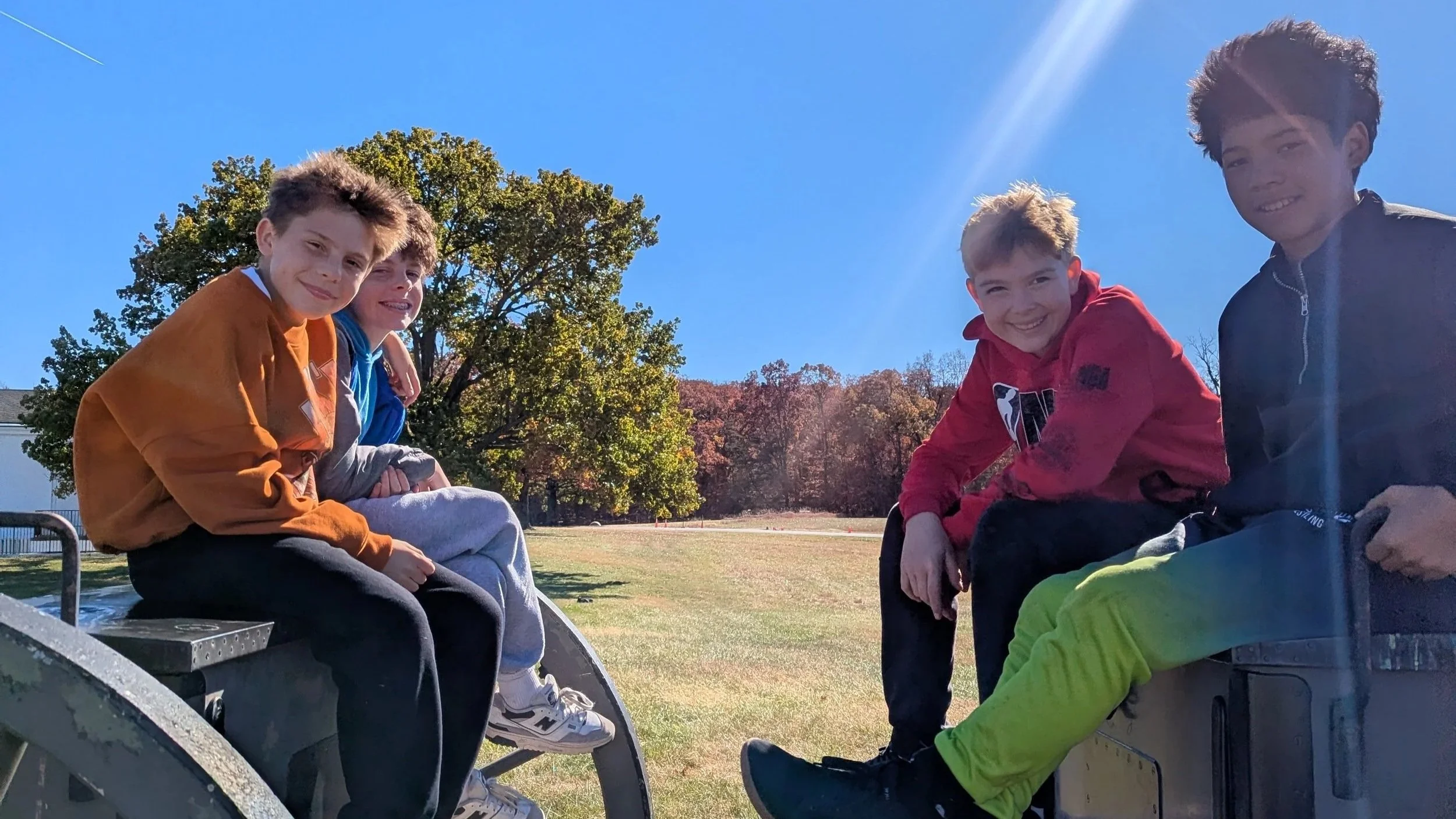
Middle school is traditionally one of the most difficult stages in American childhood. As a woman, I could relate to many of the challenges young female learners confided in me about, but I had a harder time connecting with male learners. This realization started my work into understanding how The Village School currently supports our boys and how we could do better.
So far into my journey, I have learned that connecting with boys requires a trusted relationship, and that relationship is built on being seen. This is true for girls as well, but boys need to know that as a woman, I recognize the unique challenges they face that set them apart from their female peers. The learners have taught me that being a boy today means navigating pressure to succeed, have “mad aura”, and be the “best” at something among their peers. There’s also pressure to keep it together emotionally. Most of the learners at TVS have shared that if they could change one thing about being a boy, it would be the freedom to share how they feel without the fear of being seen as weak. Creating a safe space for boys to express their emotions is what I work to build every day at TVS.
Additionally, I recently listened to researchers talk about what boys need in school and what I heard gives me optimism and hope. Richard Hawley, co-author of Reaching Boys, Teaching Boys, shared in the On Point Podcast Series, Falling Behind: The Miseducation of America’s Boys that several key components make boys’ education successful. The top three that are woven throughout the podcast are autonomy, competition, and relational learning.
As a learner centered school, we have plenty of opportunities for autonomy.
“This school lets us do our own work and we get to be community meeting leaders. We get to meet with the head of school and get to share what we want and what we want to put forward as a school to make it change and grow. Sometimes guides can’t see it all and we get to give our perspective.” - Sixth Grade Learner
“We get to work on what you want to. You have a choice. It’s not like a normal school where we have math at this time, and then geography at this time. We get a choice in what we want to work on in morning work.” Fifth Grade Learner
We also build competition into our model with our badge plans, free-play, and educational opportunities like the Youth Biomimicry Design Challenge, Khan percentage points challenge, and writing submissions to national youth literary magazines.
The ability to provide relational learning in the form of male teachers is an area of growth for our school and for schools nationally. In episode 4 of Falling Behind, Richard Reeves (president and founder of the American Institute for Boys and Men and author of the book Of Boys and Men: Why the Modern Male is Struggling, Why It Matters and What to Do About It) shares that only 23% of educators are male, with the majority teaching at the high school level. The Village School has actively recruited male educators but find ourselves in the same position as other PreK-8 schools: there simply aren’t many male educators seeking elementary positions. While we want to address this societal issue, meaningful change will take years. So what do we do for our male learners in the meantime?
We decided the next best step was to start a peer mentorship program. Three of our eighth grade boys have stepped into the role of mentor for our younger male learners. Every other Friday morning they meet to discuss topics important to them as young boys. They play competitive games and have open discussions about their goals, who they want to be, and what stereotypes face them today. The learners have a safe space to share about what it means to be a boy and what they hope to change in the world someday.
“Getting to talk to kids, especially the younger kids is always fun and always nice because you know more than them. “ - Eighth Grade Learner
“I think that it is nice to be able to sort of have a way to help younger kids where I didn’t have that as much. I like being a positive influence on people.” - Eighth Grade Learner
“I like playing games. I like the collaboration and that we get to talk to each other. I learned more about things.” - Eighth Grade Learner
“It’s fun to hang out with all of the boys.” - Fourth Grade Learner
“I liked talking about stereotypes. I learned about what they are.” - Fourth Grade Learner
“The boys group has helped me learn more about who we are as boys. I learned that stereotypes are not always right and most of the time they are wrong.” - Fifth Grade Learner
As a school counselor, I began this journey recognizing a gap in my ability to fully understand the perspective of middle school boys. What I have discovered is that The Village School provides an environment where boys can thrive in ways that differ from traditional school models. Through competition and autonomy, our learners are discovering who they are and who they want to become. What has given me the most hope and optimism is watching our eighth grade mentors step into leadership. These boys have filled a role that only they could fill - offering our younger male learners the chance to be seen, heard, and guided by someone who truly understands their experience. Watching them lead with empathy and compassion has reminded me that I do not always have to have all of the answers myself, sometimes they exist within the learners and within our community. The young boys at The Village School are learning and thriving in an environment where we all believe in them, see them, and create space for them to become who they want to be.