Navigating Independence Through The Lens of our Youngest Learners
Written by Crystal Cunje
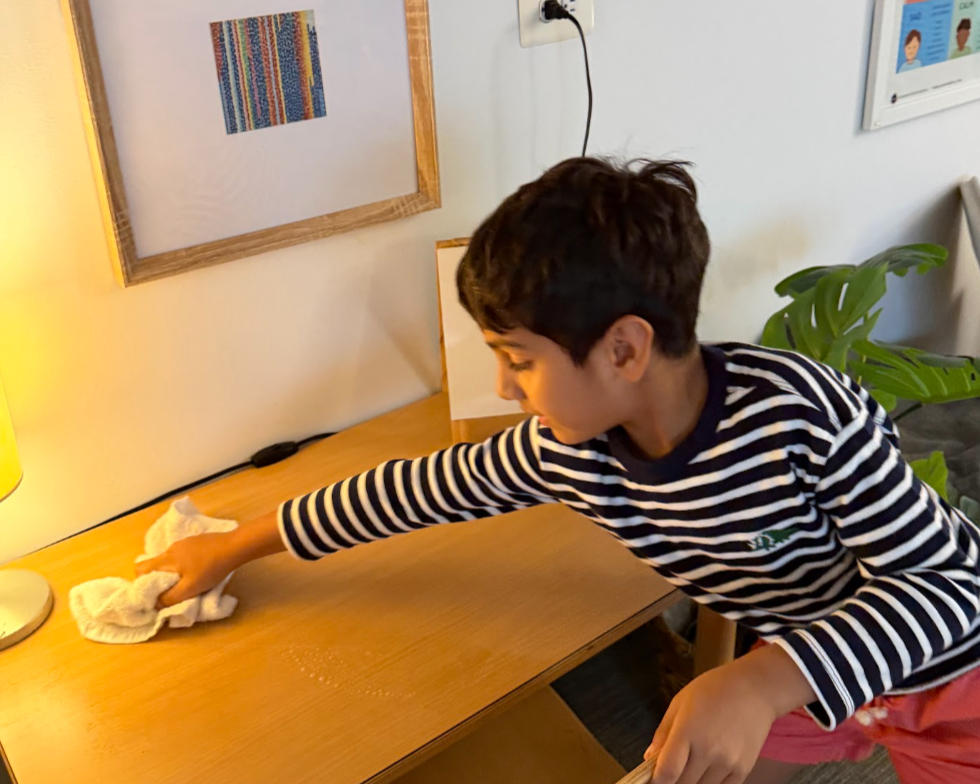
As Guides in Spark at The Village School, one of the things we have found ourselves thinking about most during our first session is independence. Working with learners ages 3-7 has given us a unique opportunity to observe what happens when young children are given the time, space, and encouragement to take ownership of their learning.
For me, this experience has also brought a new perspective after spending four years teaching kindergarten in the public school system. Those years taught me so much about young children, their capabilities, and the many ways they make sense of the world. They also gave me a deep appreciation for the teachers who work incredibly hard within a system that often asks a lot of young learners in a very short amount of time.
When I think back to those years, one of the things that stands out to me is how often time seemed to be working against us. Transitions had to happen quickly. Recess had a set amount of time. There were rigorous academic expectations to meet, lengthy lessons to fit into a schedule, and countless moments where I knew a child could do something independently, but there simply wasn't enough time to let them figure it out on their own.
I often found myself thinking, If we just had a little more time…
More time to let a child put on their own coat, even if it took several attempts. More time to let learners work through a disagreement before an adult stepped in. More time to explore an idea that emerged during a lesson. More time for creativity, art, conversation, reflection, and play.
Kindergarten has changed significantly over time. In earlier years, it was once more centered around play, exploration, and developing the whole child. Yet, in many traditional school environments today, kindergarten can feel increasingly like an introduction to first grade that is more rigid, more academically centered, and more driven by what benchmarks need to be accomplishedmet within a particular block of time.
My experience in public school has given me a particular lens through which to view our work in Spark, while my co-Guide brings their experience and Montessori perspective to our shared observations. Together, we have found ourselves asking: What becomes possible when young learners are given more space to take ownership?
Being at TVS has given us the opportunity to step back and reconsider what young learners are capable of when we give them something that can be difficult to give in a traditional school setting: space.
Space to choose. Space to wonder. Space to make mistakes. Space to try again. Space to solve problems with one another. And perhaps most importantly, space to discover that they are capable.
Working with Spark learners this session has been one of the most rewarding experiences of our teaching careers. We have been reminded over and over again that independence does not necessarily look like a young child completing a task perfectly on their own.
Sometimes independence looks like a three-year-old insisting, “I can do it!” even when their first several attempts don't work. Sometimes it looks like a five-year-old deciding which work they want to pursue and then sticking with it. Sometimes it looks like a seven-year-old helping a younger learner without being asked. These moments may seem small, but they are significant.
At TVS, we have watched learners take ownership in ways that aren't always easy to facilitate when time and structure are working against you. They are encouraged to make choices about their learning, engage with materials in creative ways, collaborate with peers, and participate in the rhythms of our community. Rather than independence being something we expect learners to arrive at, it becomes something we intentionally cultivate.
As educators, it can feel natural to help. When a child is struggling to open something, we want to open it for them. When two learners disagree, we want to solve the problem. When a learner becomes frustrated, we want to make the frustration disappear. Sometimes the most supportive thing we can do, however, is pause.
What happens if we give them another minute?
What happens if we ask a question instead of providing the answer?
What happens if we trust them to work through this?
We have learned that stepping back does not mean stepping away. In fact, it requires a great deal of attentiveness. Supporting independence means being close enough to offer encouragement, language, or a new perspective while allowing the learner to remain the person doing the work.
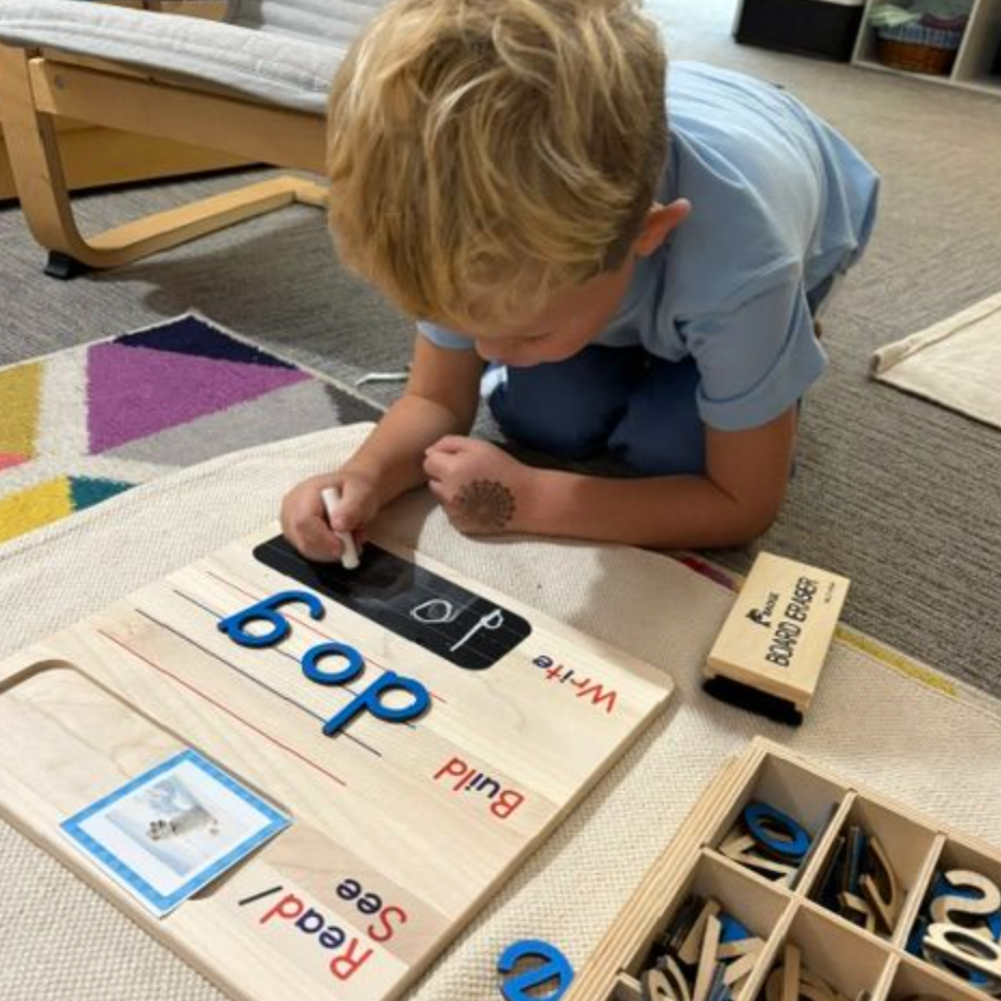
This has been especially meaningful to observe among our youngest learners. There is something powerful about watching a three-year-old carry their own belongings, navigate a transition, choose where to begin, or persist through a challenge. There is something equally powerful about watching an older learner recognize that a younger learner needs help and offer support.
These moments communicate a message that goes beyond the immediate task:
You are capable.
Your choices matter.
You belong here.
We have also begun to see creativity and social-emotional learning differently through this lens. In a schedule where every minute is accounted for, these areas can easily feel like things that happen when there is extra time. At TVS and in Spark Studio, we have seen how deeply connected they are to independence.
When a learner creates something, they are making decisions. When they play, they are negotiating, imagining, and problem solving. When they have a disagreement, they are learning to communicate their needs and consider someone else's perspective. When they experience frustration and try again, they are developing resilience. When they choose what to explore, they are beginning to understand themselves as active participants in their own education. These are not separate from learning. They are learning.
Our first session in Spark has reminded us that independence is not something that happens all at once. It grows in the small moments: when a learner decides where to begin, persists through frustration, asks a peer for help, solves a problem, or realizes they can do something they once thought they couldn't.
As Guides, we know that creating independence means intentionally making room for learners to become more involved in their own learning. And that may be one of the most exciting parts of working with our youngest learners: they are constantly showing us what becomes possible when we slow down, step back, and trust them with more.