This is really difficult.
Written by Maria Vogelei
I've always had an appreciation for abstract art: monochromatic shapes, haphazard (or so I thought) brush strokes, nonsensical (or so I thought) "scribbles." I'll admit, though, that I was also that person walking through the gallery thinking, How hard could that be? I could do that.
No. I actually cannot do that.
It turns out abstract art is really, really difficult. Abstract seems like a misnomer to me. You can't just take a canvas and throw paint at it without a plan, a concept, a technique. If you do, it comes out looking like this:
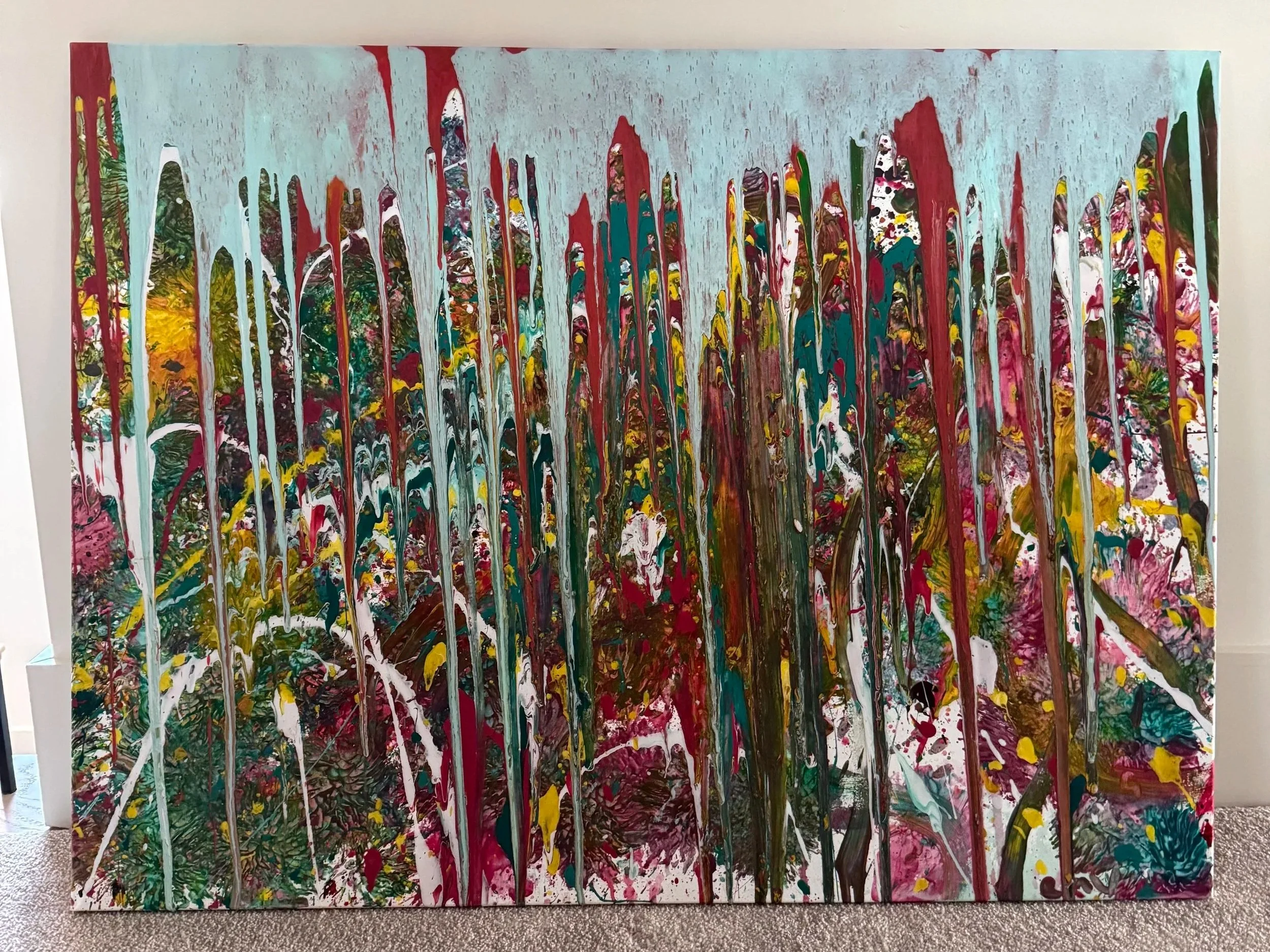
A hot mess.
Humbled, I took up a study of abstract art as part of our team's DIY Learning Summer Challenge, a professional development experience that puts guides back on the other side of the learning, where something is new and hard again. What I found is that those haphazard, monochromatic scribbles are deeply intentional and grounded in technique. So I narrowed in on one technique, practiced it a few times, and decided I was ready to revisit the canvas.
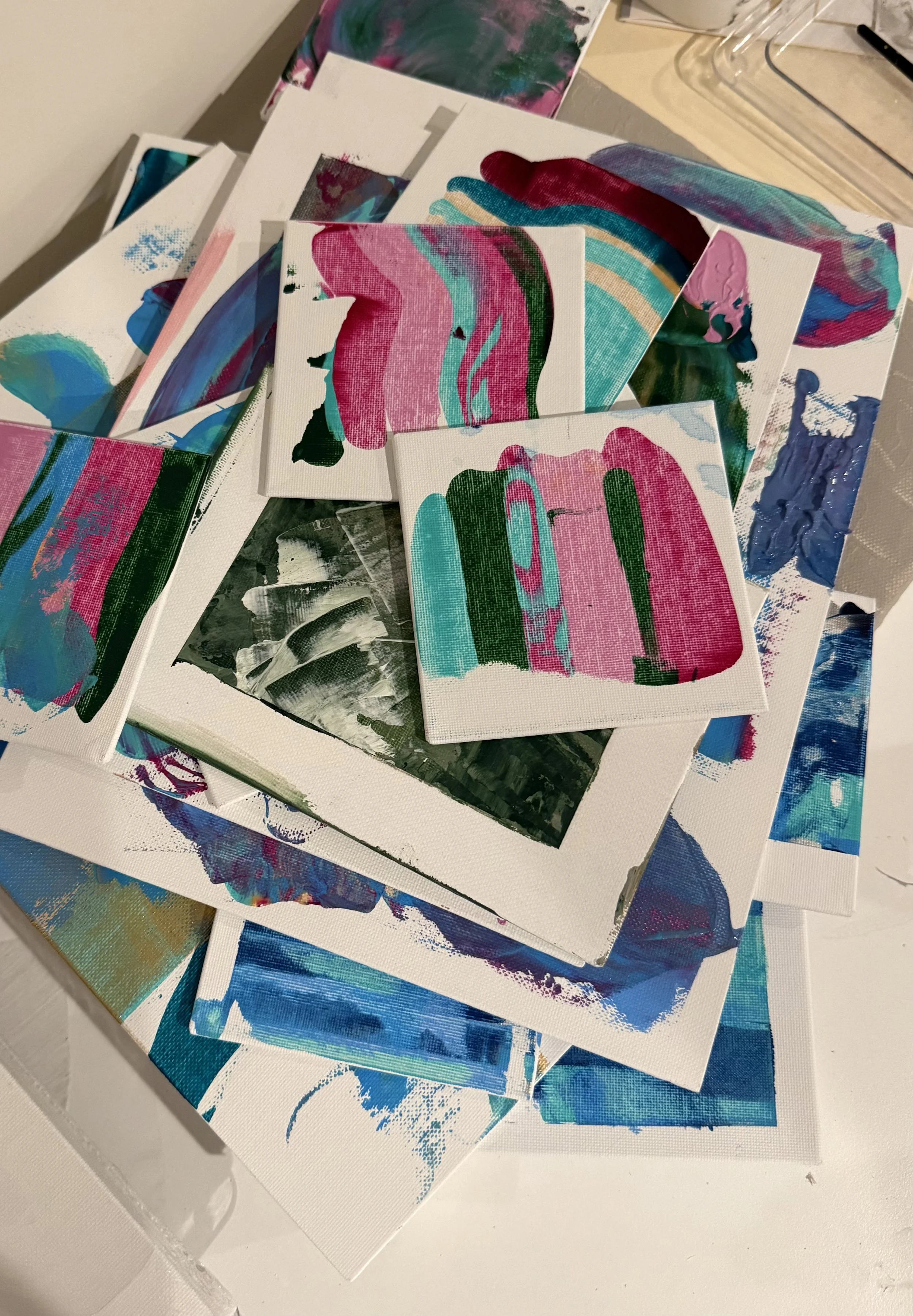
I was not ready. Here is a graveyard of work loosely titled "Knowing How to Use Paint and a Brush Is Not Enough."
Abstract art is also rich in meaning. The forms just don't announce it. Once that clicked, I waited for inspiration. It arrived in waves. Literally. I was in Southern California at the time, starting and ending each day with waves crashing outside my window. I put down my beach read (okay, and maybe also my margarita) to study their forms, their iterations, their sounds. That is what I eventually managed (after many, many tries) to put on canvas, in a series I called "Las Olas," the waves.
There’s a connection here, if you’ve stayed with me, to TVS. We often face the misconception that our guides play a passive role in the studios. Children moving freely, choosing their own work. No papers to mark up, no tests to grade. Sounds easy, right?
It is definitely not.
These past two weeks, watching our guide team meticulously plan and prepare for the school year, I was reminded again of the intention, the technique, and the time it takes to be an educator in a learner-driven environment. Every learning experience, every material choice, every guide's restraint in not stepping in is rooted in science, technique, and practice. Designing learning spaces around the way children are naturally wired to learn stands in stark contrast to arranging classrooms around what's easy to supervise. The scaffolding required to stand up a self-directed learning environment is intricate and hard-won.
At the exit interview for a family who transferred to another school after three years at TVS, the parents shared that they thought parenting self-directed learners would be easy. Perfect for a very busy couple. "We thought we could just step back and trust the process. It's actually really difficult." They're right. Letting go, letting your child struggle and fail and find their own way, is not the passive choice. It is the hard, technical one.
"Las Olas" came together because I decided not to make waves look the way people expect waves to look. I stepped back and watched how they moved. I listened to the sounds they made. Maybe letting go, as a guide and as a parent, is similar. Less performing what school and parenting are supposed to look like. More stepping back, getting quiet, and letting the rise and swell of childhood unfold on its own.
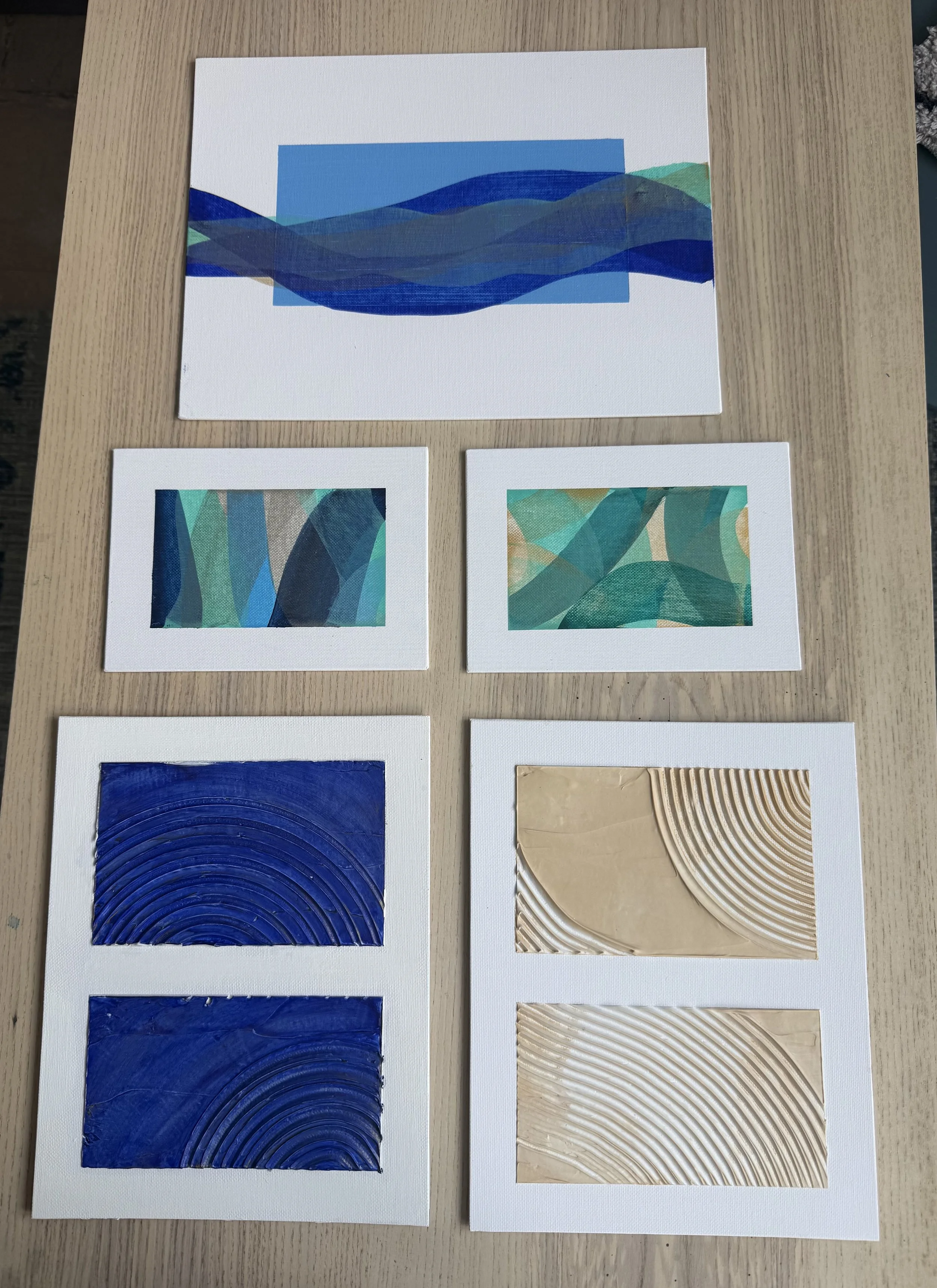
Las Olas, August 2026.